All-Terrain vs All-Season Tires
A comprehensive technical comparison of highway comfort, road noise, fuel economy, snow capability, gravel traction, towing realities, and daily trade-offs for trucks and SUVs.
Direct Answer: Which Tire Category Fits Your Driving?
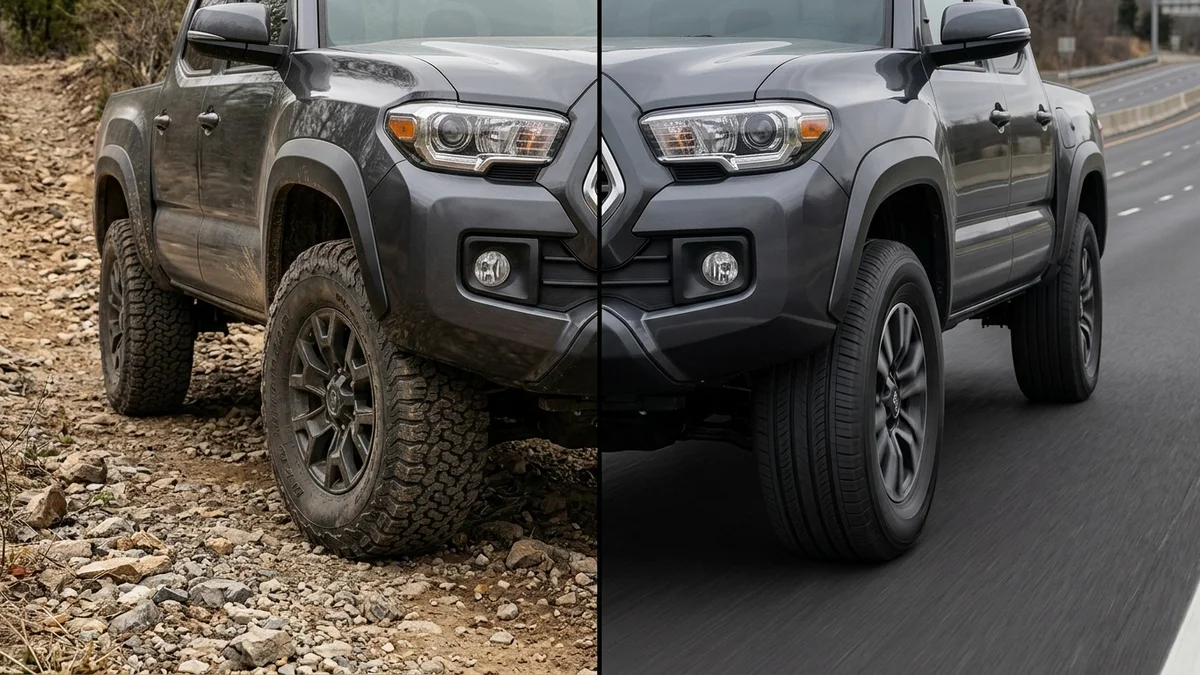
All-season tires are generally the better choice for drivers who spend nearly all of their time on paved roads and prioritize quiet ride, fuel efficiency, and everyday wet/dry performance. All-terrain tires make more sense when gravel, dirt, rough roads, or light off-road use are a regular part of driving. The tradeoff is usually greater road noise, weight, and rolling resistance, but the size of that tradeoff varies substantially by tire model and construction.
Comparison Summary: All-Season vs. All-Terrain Tires
The table below outlines the primary functional differences between road-focused all-season tires and versatile all-terrain tires across standard operating conditions:
| Performance Dimension | All-Season Tires (Touring / Highway) | All-Terrain Tires (A/T) |
|---|---|---|
| Primary Design Goal | Paved road comfort, efficiency, and year-round street versatility | Mixed pavement and unpaved loose-surface capability |
| Highway Comfort | Generally smooth, compliant, and pavement-refined | Can feel firmer, particularly in heavier LT constructions |
| Road Noise | Generally quieter on paved roads | Often noticeable tread pattern hum; model-dependent |
| Fuel Efficiency | Generally lower rolling-resistance potential | Rolling resistance and tire mass may increase |
| Wet Pavement | Optimized circumferential drainage and wet braking | Capable wet drainage; braking performance varies by compound |
| Gravel & Dirt | Adequate on smooth packed surfaces; limited loose grip | Generally stronger loose-surface traction; model-dependent |
| Mud Traction | Prone to packing quickly in sticky mud | Generally better in light mud; deep mud may exceed typical A/T capability |
| Rocks & Ruts | Limited casing protection against sharp stone punctures | Some models use tread and construction features suited to rough surfaces |
| Snow Capability | Suitable for light snow; cold packed grip varies by model | Snow capability varies widely; some models carry 3PMSF |
| Tread Durability | Engineered for long, even highway mileage wear | Some models emphasize mixed-surface durability; wear remains use- and model-dependent |
| Cut / Impact Resistance | Road-focused construction; product-specific durability features vary | Some models offer durability-focused tread or construction features |
| Towing & Hauling | Well-suited to highway towing; load capacity and inflation remain primary | Can suit mixed-surface towing applications; load capacity and inflation remain primary |
| Best Use Case | Highway commuting, suburban driving, family SUVs, paved roads | Trucks and SUVs driving mixed pavement, gravel, job sites, and trails |
Understanding the Categories: All-Season vs. All-Terrain
Tire categories describe intended use and typical tread-design priorities, while construction details vary by product:
What Are All-Season Tires?
All-season tires are designed for year-round paved-road use across dry, wet, and mild winter conditions. For trucks and SUVs, one road-focused subtype is commonly categorized as Highway All-Season (H/T). All-season tread designs often use tighter tread-block spacing and more continuous road-contact features to support on-road comfort, noise control, and predictable pavement performance.
What Are All-Terrain Tires?
All-terrain (A/T) tires are designed to bridge the gap between paved roads and unpaved surfaces such as gravel, dirt, sand, and light mud. They often use larger tread blocks, more open voids, and more pronounced shoulder features to improve loose-surface traction. The balance between off-road capability and on-road refinement varies substantially by tire model.
Important Nuance: Not All All-Terrain Tires Are the Same
A common misconception is that all all-terrain tires behave identically on the highway. The all-terrain segment spans a wide spectrum:
Generally tighter tread spacing and stronger pavement refinement while retaining mixed-surface capability. Engineered for crossover SUVs and daily-driven trucks that prioritize quiet highway driving with occasional gravel road or light trail use.
Generally larger tread blocks, more open voids, and stronger loose-surface focus, with greater pavement tradeoffs varying by model. They provide stronger mechanical bite in deep dirt, loose shale, and unpaved trails.
A separate, more specialized off-road category intended for demanding loose terrain and mud, typically with greater pavement compromises in road noise, wet asphalt grip, and tread life.
Highway Driving, Road Noise & Pavement Refinement
All-season tires generally prioritize quiet, efficient on-road driving. All-terrain tires usually trade some pavement refinement for greater traction and durability on loose or rough surfaces, with the size of that tradeoff varying substantially by tire model.
Tire pattern noise is generated when air is compressed and released within tread voids as the contact patch rotates against the road. The larger, wider grooves of an all-terrain tire trap and release larger air volumes, producing a rhythmic hum at highway speeds. Irregular heel-and-toe tread wear will significantly amplify this noise over time if regular rotations are skipped.
Many road-focused all-season designs use more continuous center tread features that can support direct on-center steering feel and stable highway tracking. Taller, independent all-terrain tread blocks experience subtle block squirm under lateral cornering forces, which can create a slightly more relaxed or insulated steering feel on asphalt.
Fuel Economy and Rolling Resistance
Moving to an all-terrain tire can reduce fuel economy, particularly if the replacement is heavier, more aggressive, or uses LT construction. The actual change depends on the specific tire, size, inflation, vehicle, and driving conditions.
- Tread Hysteresis & Block Deformation: Deeper, chunky tread lugs flex under rotational load, absorbing and dissipating mechanical energy as heat rather than propelling the vehicle forward.
- Rotational Inertia & Unsprung Mass: All-terrain replacements can be heavier than road-focused all-season tires, especially when the change also involves a larger size, heavier-duty construction, or LT specification. The magnitude of the weight difference depends on the exact tire.
- Upsizing & Overall Diameter Changes: Upgrading to a larger overall tire diameter alters the vehicle's effective axle gear ratio. You can use our Tire Size Calculator to inspect exact diameter and revs-per-mile changes before modifying sizing.
All-Season vs. All-Terrain Tread Features
Off-Road & Loose-Surface Performance Breakdown
Tire performance shifts dramatically when pavement ends. How well each tire manages off-road terrain depends on the surface material:
All-season tires can travel smoothly across well-maintained gravel and graded dirt roads. However, their shallower grooves provide less lateral stability in loose gravel over hardpack, and small stones can become wedged between tight tread ribs.
All-terrain tires generally provide stronger traction in loose gravel and sand by utilizing open tread voids and block edges to grip the loose substrate.
In wet dirt and shallow mud, all-terrain tires can evacuate debris through lateral channels to help maintain grip. Deep, heavy mud can exceed the capability of many A/T designs, where a more specialized mud-terrain tire may be better suited.
Wet-Road Performance and Hydroplaning Resistance
All-season tires are generally optimized more heavily for paved wet-road behavior, while all-terrain wet performance varies widely with tread design and model.
On standing water at highway speeds, all-season tires use circumferential grooves to channel water away from the contact patch. All-terrain wet-road performance varies widely with tread design, compound, size, construction, and tread condition. Some road-focused all-season tires may provide stronger paved wet-road braking and hydroplaning performance than more aggressive all-terrain designs, but the result depends on the exact tires being compared.
Snow and Winter Performance Nuances
Some all-terrain tires provide strong snow capability, especially models carrying 3PMSF, but winter performance varies considerably by model. Neither the all-terrain category nor the 3PMSF symbol should be treated as equivalent to dedicated winter-tire performance on snow and ice.
- Deep Snow Traction: More open tread features on some all-terrain tires can improve traction in loose or deeper snow, but performance varies substantially by model and snow condition.
- Packed Snow & 3PMSF: All-terrain tires carrying the Three-Peak Mountain Snowflake (3PMSF) symbol have passed standardized medium-packed snow acceleration testing under ASTM F1805.
- Hard-Packed Ice: Some all-terrain compounds may provide less low-temperature ice grip than dedicated winter tires, but exact performance depends on the specific models and test conditions. For a detailed seasonal breakdown, review our Winter Tires vs. All-Season Tires Guide.
Tire Category vs. Tire Construction (P-Metric vs. LT)
A critical distinction that many drivers overlook is the difference between a tire's tread category (All-Season vs. All-Terrain) and its structural internal construction (Passenger/P-Metric vs. Light Truck/LT):
A driver moving from a P-metric road tire to a heavier-duty LT all-terrain tire may notice a larger change in ride, weight, and efficiency than a driver switching between two similarly constructed P-metric tires.
Passenger-type tire size systems with load and inflation characteristics defined for their specified applications. Ride, casing construction, and required inflation vary by tire size, product, vehicle, and load.
Light-truck tire size systems with load and inflation tables intended for light-truck applications. Available load ranges, rated pressures, casing designs, and durability features vary by size and product. LT tires can support higher loads at specified pressures where the tire’s published load/inflation data and vehicle requirements permit.
Towing and Hauling Realities
For towing or hauling, load capacity and correct inflation matter more than whether the tread category is all-season or all-terrain. Some LT all-terrain tires are available with higher-duty constructions, but the A/T label itself does not increase load capacity.
- Load Index Verification: Always ensure replacement tires match or exceed the vehicle manufacturer’s original equipment (OE) load index. Review our Tire Load Index Chart to look up certified single and dual tire load capacities.
- Trailer Tongue Weight: Heavy tongue weight increases rear axle load. LT tires may use higher rated inflation pressures for specified loads, but the correct pressure should follow the vehicle placard, tire manufacturer guidance, and applicable load/inflation requirements rather than simply using the tire’s maximum sidewall pressure.
- Boat Ramps & Unpaved Campsites: While all-season tires handle highway towing with lower rolling resistance, all-terrain tires can offer stronger traction on slick boat ramps, wet grass, and steep unpaved access roads.
Tread Life, Durability & Rough-Surface Protection
All-season touring tires often prioritize long pavement tread life, while all-terrain tires trade some on-road refinement for mixed-surface capability and durability. Actual tread life varies too much by model and use to assign a universal winner.
Some all-terrain tires use construction and tread features intended to improve resistance to cuts, chips, or impacts on rough surfaces, but these features are product-specific. Regular rotation according to the vehicle and tire manufacturer’s recommended interval can help limit uneven heel-and-toe wear. More aggressive all-terrain tread patterns may require closer monitoring for irregular wear.
Pavement Refinement vs. Loose-Surface Capability
Decision Matrix: How to Choose for Your Vehicle
Use the practical guidelines below to select the tire category best matched to your actual driving environment:
Choose All-Season Tires If:
- Your driving is predominantly paved highway and suburban streets
- Off-pavement driving is rare or limited to maintained gravel driveways
- You prioritize a quiet, smooth ride and fuel efficiency
- Crisp highway steering response and wet-road braking are top priorities
- You drive a daily commuter SUV, crossover, or light highway truck
Choose All-Terrain Tires If:
- Gravel, dirt, rural roads, or construction job sites are part of regular driving
- You tow trailers onto unpaved ground, boat ramps, or slick access roads
- You participate in weekend camping, hunting, trail driving, or light off-roading
- You regularly drive on rough or rocky surfaces where a suitably designed all-terrain tire may provide useful durability features
- You accept the potential trade-offs in tread noise, rolling resistance, and mass
Moving from a road-focused all-season tire to an all-terrain tire often changes tread noise, tire mass, rolling resistance, loose-surface traction, and rough-surface durability. However, the magnitude of that change depends heavily on whether you choose a mild on-road all-terrain or a more aggressive all-terrain, especially when size or LT construction also changes.
Related Fitment Calculators & Reference Charts
Frequently Asked Questions
References & Authoritative Standards
- Tire Rack Tech Center – All-Terrain vs. Highway All-Season Tire Comparisons. Technical categorization, on-road noise evaluations, and compound durability on mixed surfaces.
- U.S. Tire Manufacturers Association (USTMA). Industry standards on passenger and light truck tire classifications, load ranges, and inflation guidelines.
- ASTM International – ASTM F1805. Standard Test Method for Single Wheel Driving Traction in a Straight Line on Snow-Covered Surfaces.
- Consumer Reports – All-Terrain Truck Tire Test Data & Highway Ratings. Empirical comparative data for wet braking, rolling resistance, noise levels, and tread life.
- National Highway Traffic Safety Administration (NHTSA) – Tire Safety, Sizing & Load Ratings. Federal safety guidelines and vehicle placard compliance standards (49 CFR § 571.139).
Calculations use documented geometric and mathematical relationships, with tire-industry standards and manufacturer specifications referenced where relevant.